

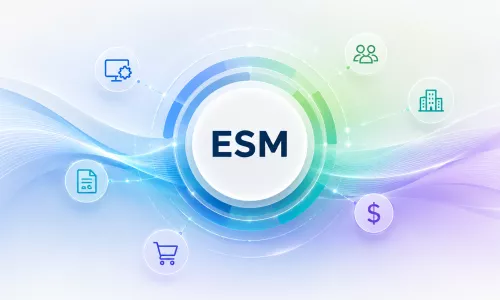
To understand the difference, we need to look at who these systems primarily serve. ITSM (IT Service Management) is a set of practices and tools designed for managing IT services. It helps the IT department efficiently manage infrastructure, resolve network outages, reset passwords, or deploy new software. It is the central brain for the smooth operation of your IT support.
On the other hand stands ESM (Enterprise Service Management). This approach takes the best of ITSM (clear ticketing, user service catalogs, and automation) and extends it to all other departments in the company. Why, after all, should only the IT team have access to a great, organized request-handling system?
Thanks to ESM, human resources, for example, can handle the onboarding of new employees smoothly and paperlessly. The facilities department can digitally receive maintenance fault reports, and the legal department can manage contract review requests. Everything takes place on a single clear platform.
The main difference lies in the scope itself. ITSM takes care of hardware and software technologies, while ESM ensures the smooth running of the entire enterprise through shared services.
Extending ITSM to ESM brings companies a huge competitive advantage. Employees have access to a single unified self-service portal for all their needs. Whether they need to borrow a new monitor or get a confirmation from accounting, they always know where to turn. This significantly facilitates process automation and increases overall satisfaction across teams.